# With your earmarked donation „Broadleaf trees for the climate“, you support nature-close and future-proof forest conversion
Climate adaptation in the forest
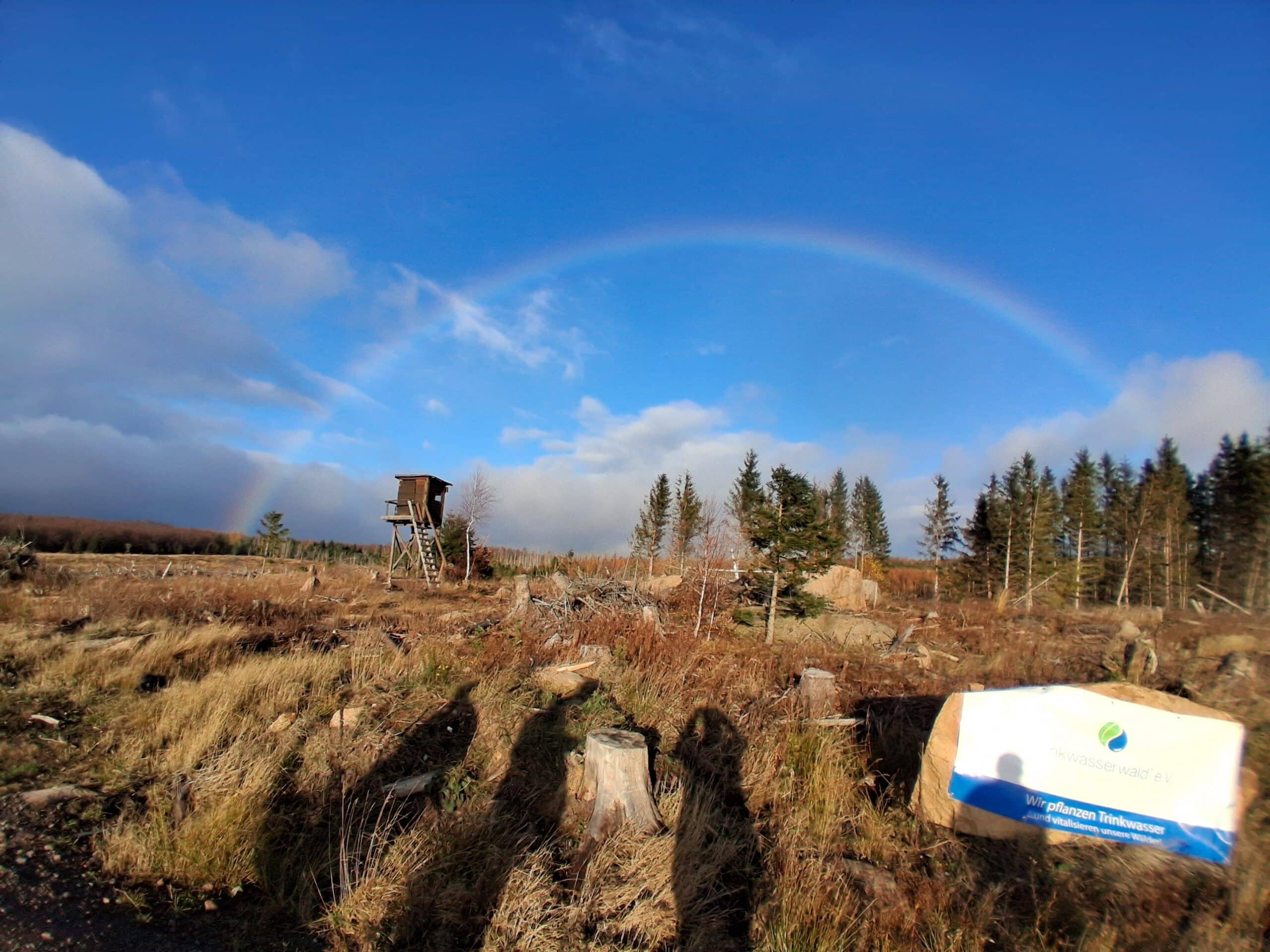
Climate change is advancing and with it extreme weather events and droughts are increasing. Bad for our forests: Since 2017, 900,000 hectares of forest have died – predominantly pure conifer stands – and only one in five trees is now considered healthy. Now, converting monocultural conifer forests through broadleaf tree planting has many ecological benefits. Deciduous forests improve the forest’s ability to store rainwater, which also makes it more resilient to droughts.
What one hectare of mixed deciduous forest achieves
If a former coniferous forest is converted into a climate-resilient deciduous forest through the planting of broadleaf trees, groundwater recharge can improve by 500,000 up to 1,200,000 litres per year and hectare according to existing studies and climate modelling.
Climate-resilient and fit for the future
Native deciduous trees such as beech, sessile oak or hornbeam are adapted to regional soil and climate conditions. They promote the build-up of humus, store rainfall, cope better with drought and storms, and thus support the development of future-proof, resilient forests. Such forests remain stable even as carbon sinks, provide habitat for countless animal and plant species, produce timber, and promote our most valuable asset: clean drinking water.
Plant the future
With your support, you help actively drive the transformation to near-natural woodland. Every contribution supports new deciduous tree plantings that make our native forests fit for the future. This is how you support our forest and help preserve our natural foundations of life.