

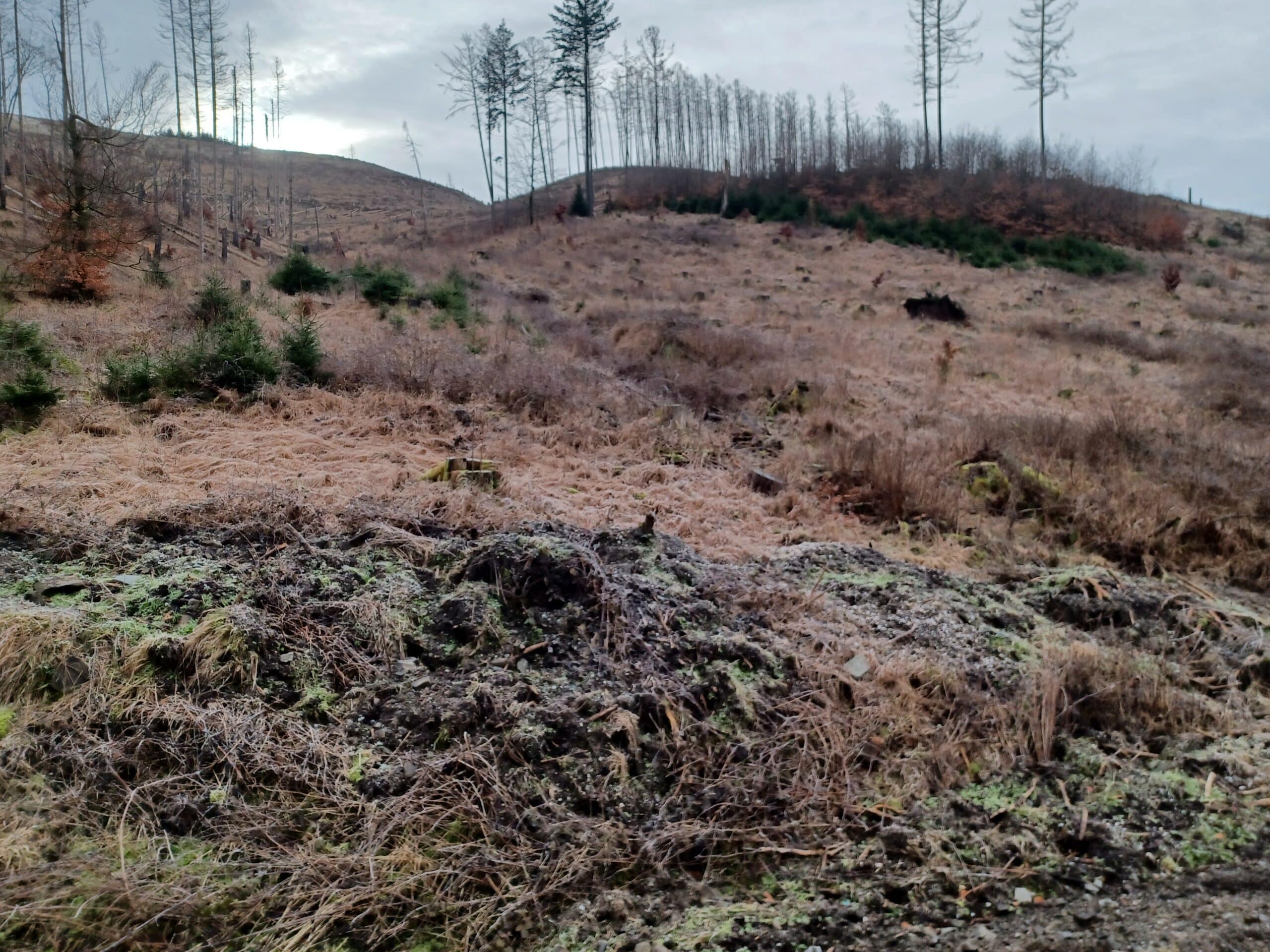
The Harz was particularly affected by the extreme drought of recent years, with its large stand-off-site spruce stands. Large areas of forest died off and now need our swift support so that they can quickly become a climate-resilient and future-proof forest ecosystem again.
At present, it is assumed nationwide that forest dieback has affected an area of 500,000 hectares as a result of the drought years, with around 90 percent of the damaged timber consisting of coniferous wood, predominantly spruce.
In the Harz, two thirds of the spruce trees on around 21,000 hectares have now died. So far, only just under 1,000 hectares of forest have been replanted each year. The remaining areas, mostly completely cleared to prevent the further spread of the bark beetle or the outbreak of fires, left the soil unprotected. Wind erosion, humus depletion and drying out greatly reduced the soil’s water retention capacity and also have a negative effect on biodiversity and the surrounding forest areas.
Support us now with your tree donation, to reforest it with a rich variety of species now.
More news
 #News 30.04.2026
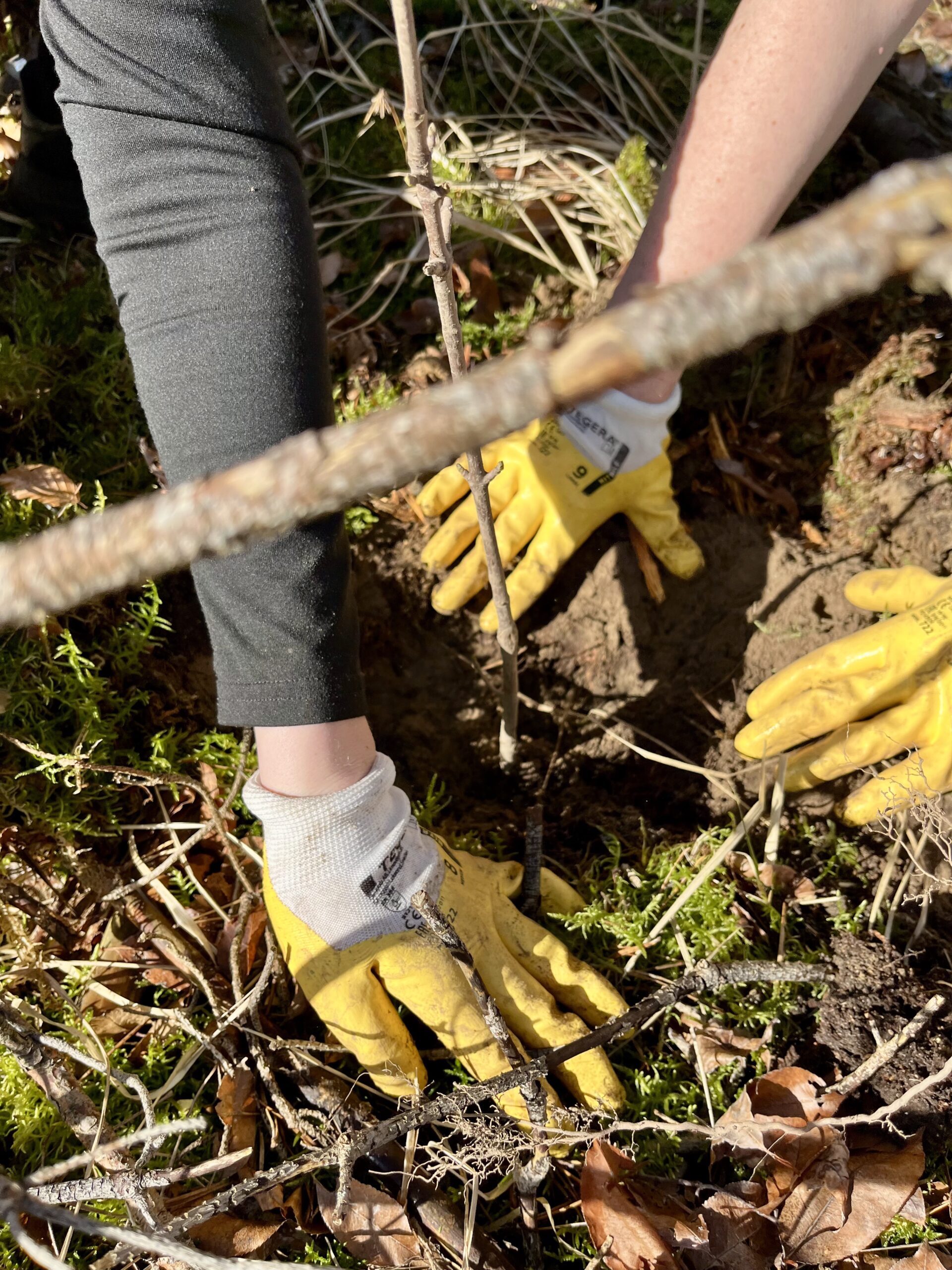
Back in the woods soon! We’re looking for planting guides who would like to support our environmental protection campaigns. Here are our next autumn dates 2026 02.10. Bremerhaven 20.11. Berlin 21.11. Ludwigsburg 23.11. Nuremberg Interested? Then please get in touch with us straight away. And […]
 #News 03.03.2026
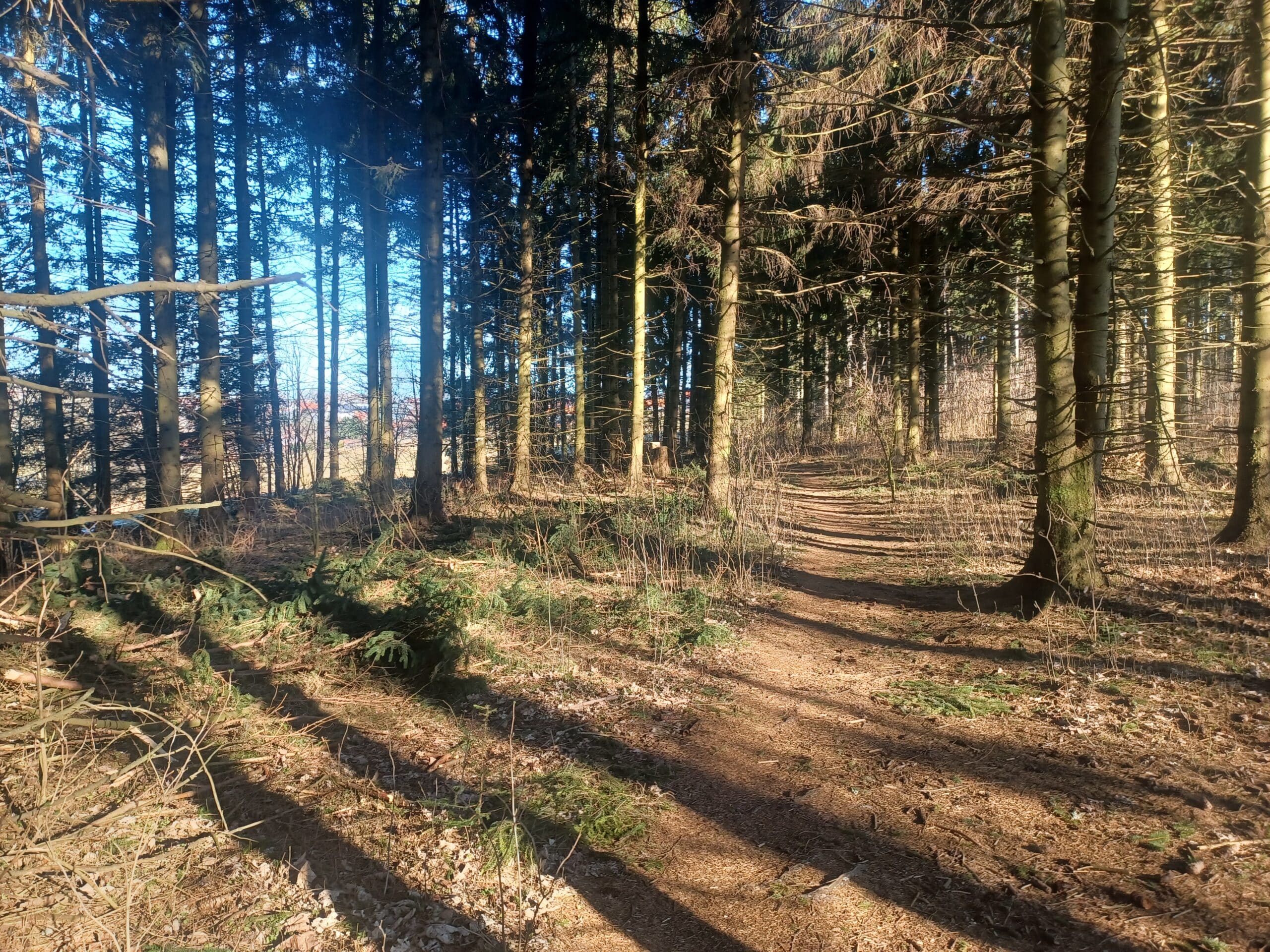
Planting deciduous trees together On 21 March, the Day of the Forest, something very special is happening in the Harz: children and parents are writing the future together. Just one day before World Water Day, we are all getting stuck in together – with […]
 #News 18.12.2025
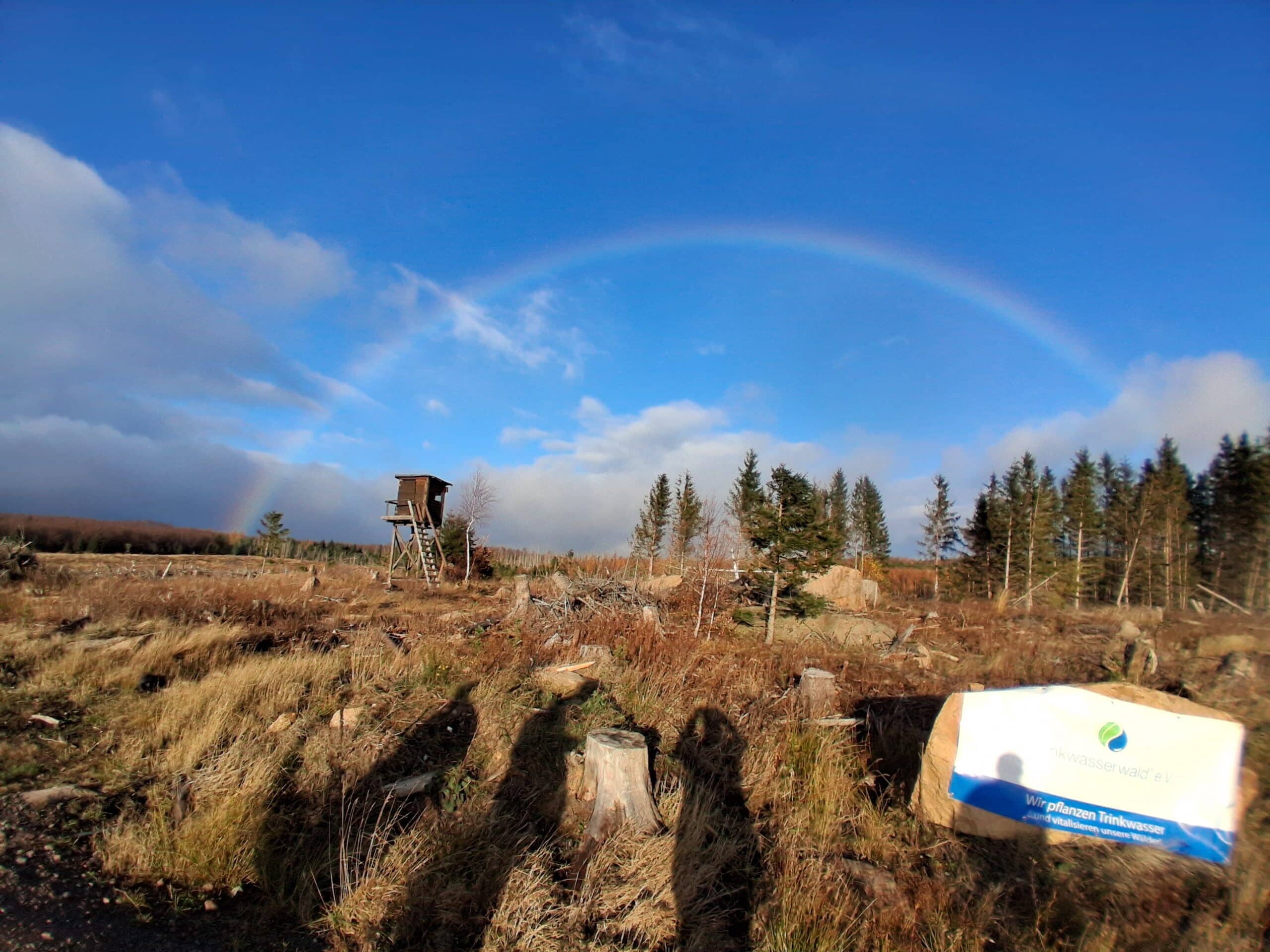
2025: 95,600 site-appropriate deciduous trees of 23 different species were planted on 28.15 hectares of former coniferous forest damage areas Hamburg, 18 December 2025 – The environmental protection association Trinkwasserwald e. V. draws an impressive balance for 2025: 95,600 site-appropriate deciduous trees […]