

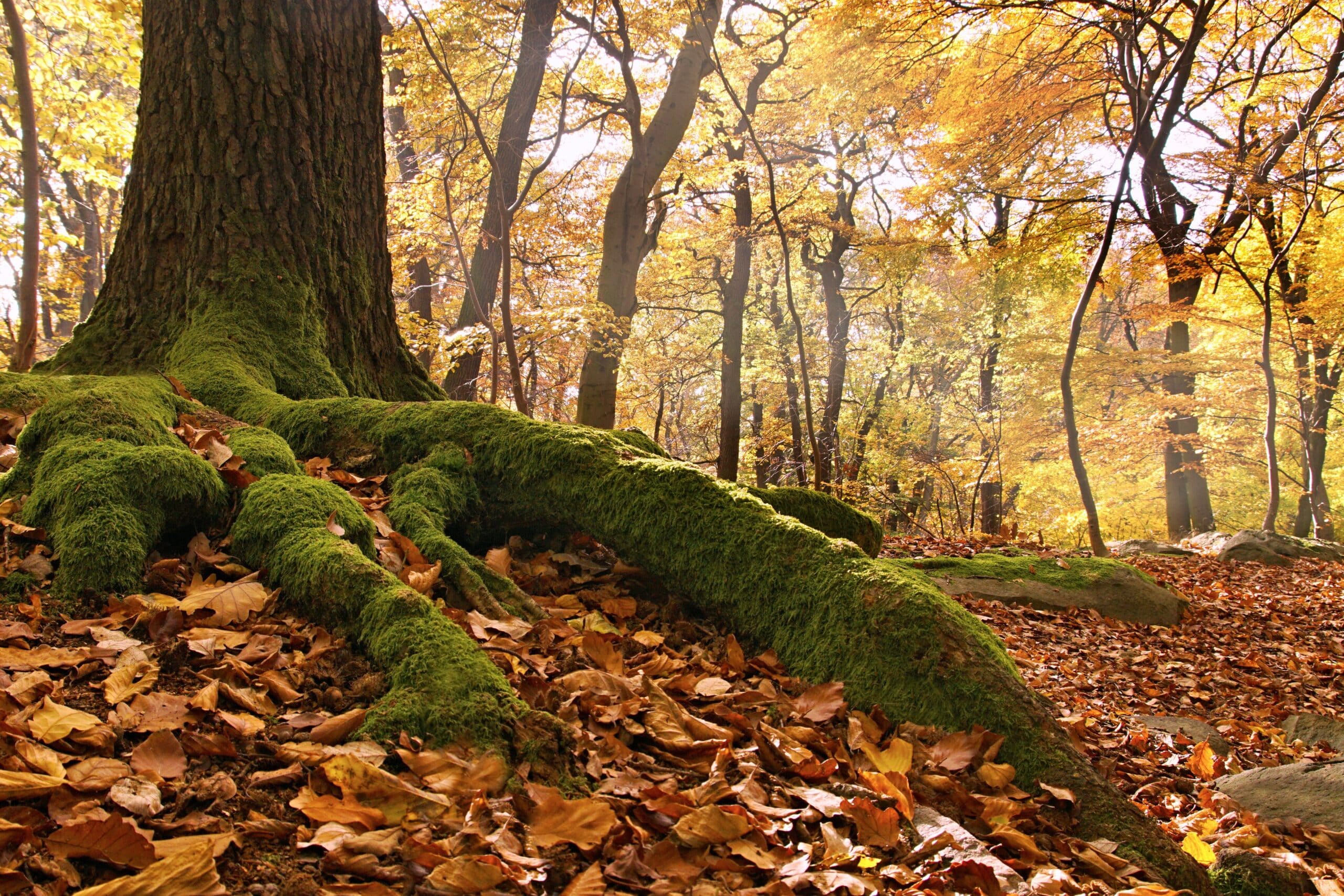
Forests are not only the green lungs of our planet – they also act as a buffer in the climate system. This is because trees absorb carbon during photosynthesis and store it in their substance in the form of organic compounds. Overall, forests thus remove considerable amounts of CO2 from the atmosphere. For this to remain so, we must convert our forests into climate-resilient mixed deciduous forests.
Coniferous forest in climate change
Due to climate change – lack of rainfall/higher temperatures – dramatic dieback processes are currently being seen in this country across more than 900,000 hectares of forest — predominantly spruce —, with a rising trend. This forest loss and reduced biomass growth lead to a sustained decrease in CO2 offset. The results of the fourth Federal Forest Inventory (p. 45) show that, as a result of climate-related forest dieback and the associated loss of living biomass, forests have become a source of carbon since 2017. In doing so, they lose a livelihood of immense importance for our society – their ability to remove carbon from the atmosphere and slow climate change.
Planting deciduous trees together for the climate
“Preserving forests and all their ecosystem services and adapting them to the changes in climate change is the most important challenge for politicians, forest owners and society. Rising temperatures, changes in precipitation patterns and an increase in extreme events are leading to significant disturbances in forests. … The necessary measures to preserve and adapt forests, in view of advancing climate change, aim to permanently secure the diverse ecosystem services of forests. This often requires active adaptation of forests to climate change by transforming at-risk forests into climate-resilient mixed forests, with predominantly native tree species and provenances suited to the site and capable of withstanding the projected climate changes.” Federal Forest Inventory 2022, p. 47
Drinking water forest plantings
Planting deciduous trees in conifer monocultures increases resilience against droughts and storms. They help ensure that our forests remain stable natural carbon sinks.
More forest. Water. Values.
- #Forest. Water. Values.
Biodiversity Ampoorter, E. et al. (2020): Tree diversity is key for promoting the diversity and abundance of forest-associated taxa in Europe. Oikos 129(2): 133–146. https://lirias.kuleuven.be/retrieve/86e3e71e-680e-4175-b0b3-694c3a90db74 Europe-wide multi-site study: Tree species diversity systematically promotes the diversity and abundance of associated […]
- #Forest. Water. Values.
Mushrooms are among the oldest living organisms on Earth. Their history goes back more than one billion years – long before the first plants or animals existed. Fossil finds show that mushrooms were already present in the early developmental phases […]
- #Forest. Water. Values.
When we plant deciduous trees together, we do so in monoculture coniferous forests or on damaged conifer forest areas that have become diseased and died as a result of drought and damage events. Our deciduous tree planting thus creates drinking water forests. A drinking water forest… is a former […]