

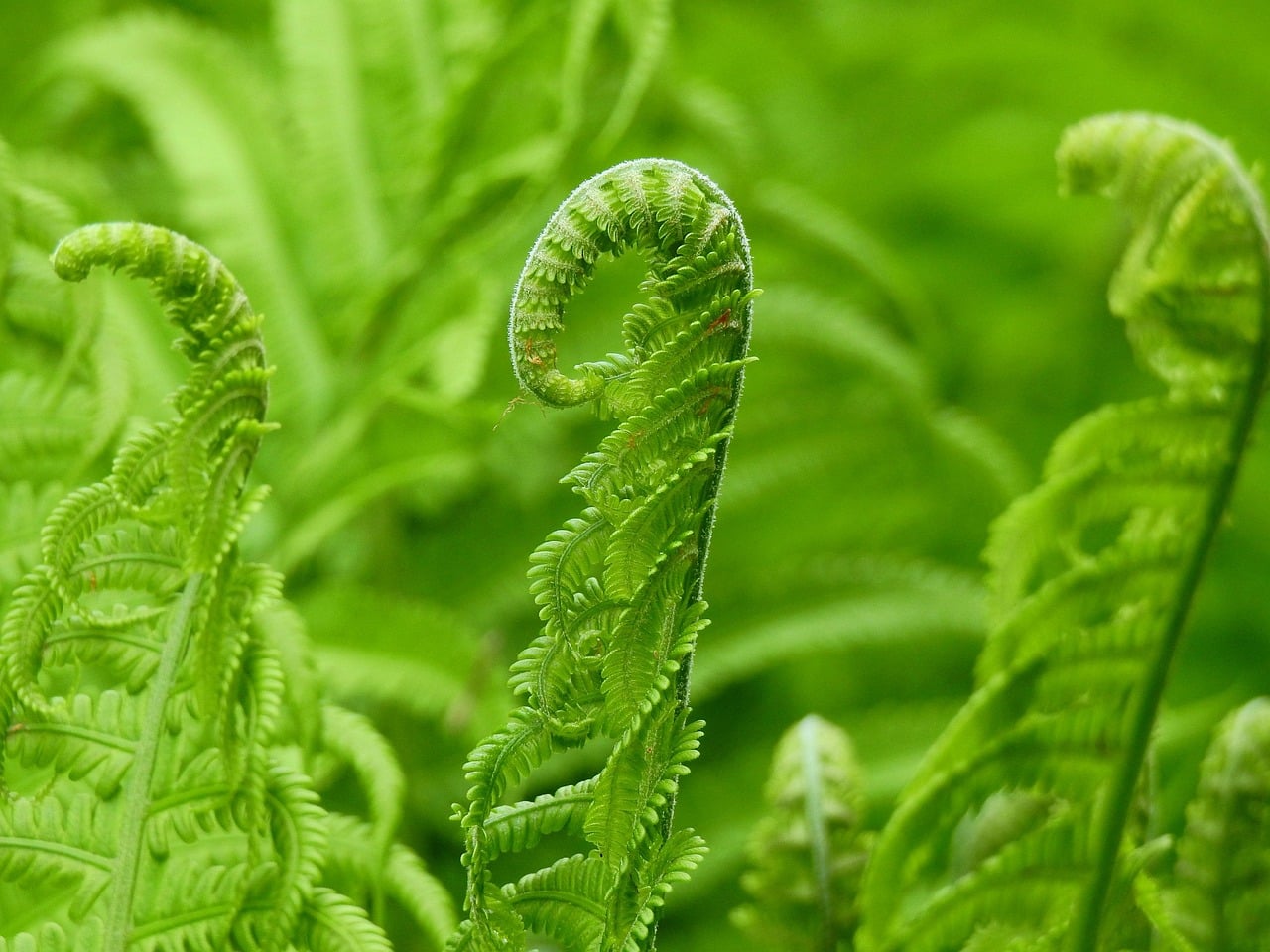
Ferns are among the oldest plant groups on Earth…
… their history stretches back over 350 million years, to the age of the dinosaurs. Even then, they covered large parts of the planet and shaped the early forests of our Earth. This long evolution has made them true masters of adaptation: robust, undemanding and perfectly adapted to changing environmental conditions.
After disturbances such as forest fires, storm events or bark beetle infestation, ferns are often the first plants to colonise the affected areas. With their strong rhizomes and finely divided fronds, they stabilise the soil, prevent erosion and retain moisture. In this way, they create favourable conditions for the growth of other plants – a crucial contribution to the natural regeneration of the forest.
In addition, ferns play an important role in biodiversity. They provide habitat and shelter for numerous insects, small animals and microorganisms. Their large leaves provide shade, regulate the microclimate and help to maintain a healthy forest floor.
More forest. Water. Values.
- #Forest. Water. Values.
Mushrooms are among the oldest living organisms on Earth. Their history goes back more than one billion years – long before the first plants or animals existed. Fossil finds show that mushrooms were already present in the early developmental phases […]
- #Forest. Water. Values.
One hectare of Trinkwasserwald… … may sound inconspicuous – about the size of one and a half football pitches — yet something great happens on this area: year after year, up to 800,000 litres more clean groundwater are generated here on average than […]
- #Forest. Water. Values.
Trees are true masters of adaptation and survival Their growth is far more than an impressive natural phenomenon – it is the result of a long evolutionary development and the basis for the stability of entire ecosystems. […]